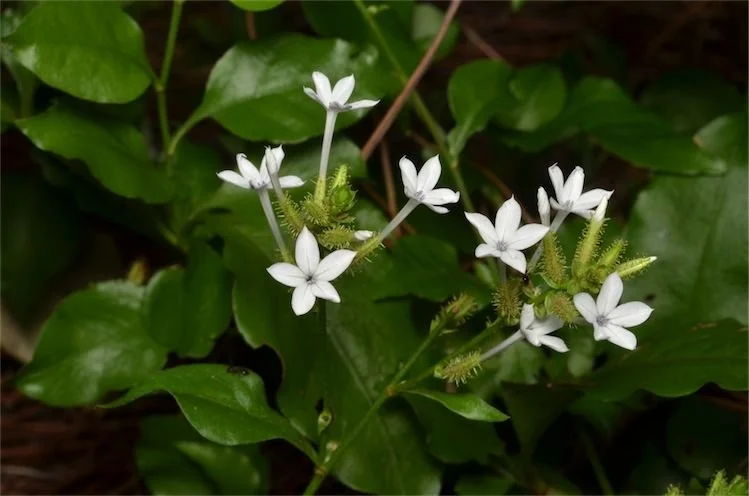
Scrambling shrub or small herb with elegant white to pale blue star-shaped flowers. Small pill shaped seed pods with sticky hairs. Grows as an understory plant in monsoon forest and vine thickets. Prized for its usefulness as a shade tolerant ground cover in urban and rural gardens. 0.2-1M
Read MoreMelaleuca nervosa→
/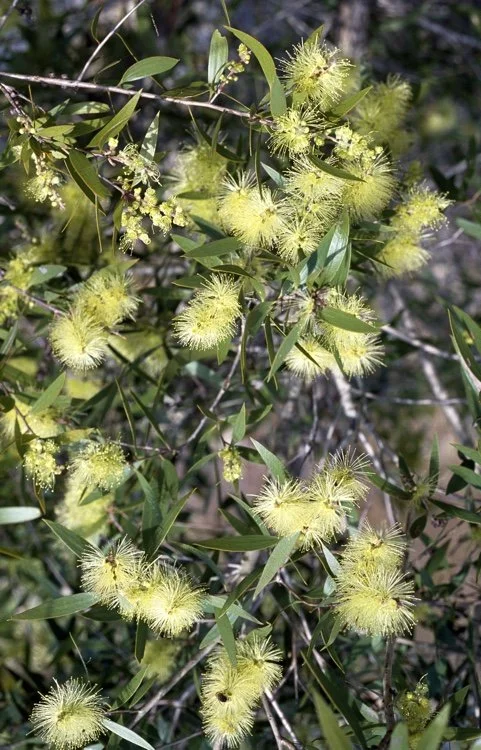
Small to medium paperbark with profusions of bottlebrush flowers. Usually cream, green, yellow-green and occasionally red. Velvety soft grey-green juvenile foliage. Cream to grey fibrous, layered bark. Grows on outskirts of swamps and wetlands. An ideal choice for wetter areas on rural properties, or to bring character and colour to parks and gardens. 2-10M
Read MoreHibiscus brennanii→
/
Rare and endemic hibiscus with velvety soft grey-green foliage and large powder pink flowers. Very hardy small shrub from the Kakadu region. A highly sought after ornamental addition to urban and rural gardens and rockeries. Requires full sun. 1.5 - 3M
Read MoreMelastoma affine→
/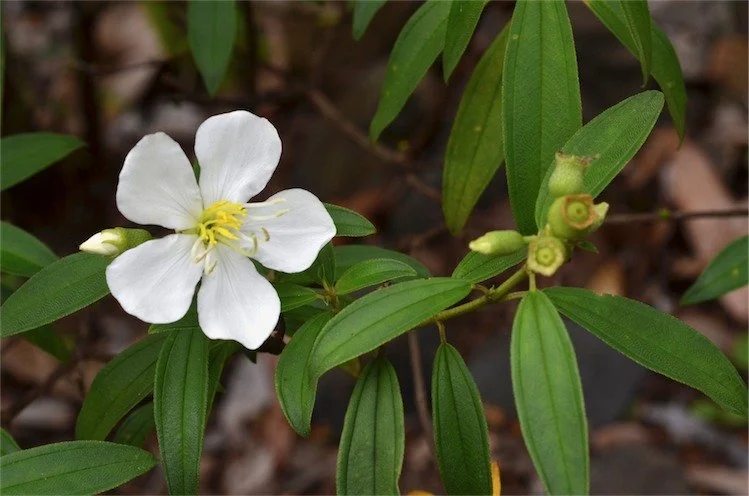
Very unique and attractive small shrub with decorative large white flowers throughout the year, and delicious sweet edible fruit. Ideal in pots or part shade gardens with ample water. 1-2M
Read MoreAcacia lysiphloia→
/
Spreading shrub with characteristic bright red-brown peeling ‘minni ritchi’ bark and generous flushes of yellow cylindrical flowers. Short, grey-green lightly furred and somewhat sticky leaves. Versatile and attractive shrub for full sun gardens. 1-4M
Read MoreHakea lorea→
/
Shrub or small tree with unique needle-like leaves, sometimes weeping in habit. Striking corky bark and magnificently bold cream flowers, which can grow from trunk. Uncommon in cultivation. Full sun and rocky or sandy soils. 2-7m
Read MoreAcacia humifusa→
/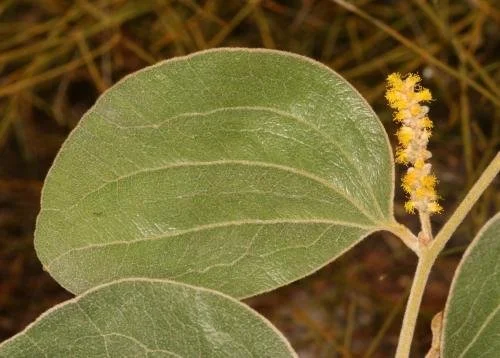
Lovely shrub or ground cover with soft blue-green semi-circular miniature elephant ear shaped leaves and bright yellow cylindrical flower spikes. Can flower throughout the year. Ideal for infilling and low screening in gardens and rockeries. Prefers full sun and sandy soils. 0.5-2M
Read MoreAcacia monticola→
/
Medium sized spreading shrub with beautiful and distinctive red-brown peeling ‘minni-ritchi’ bark. Small leaves with prolific bright yellow globular flowers. Excellent for garden beds and rockeries. Prefers full sun and rocky or sandy soils. 2-5M
Read MoreAcacia oncinocarpa→
/
Attractive rounded spreading shrub with profusion of pale yellow flower spikes. Widespread endemic found in open forest. Excellent fast growing screening specimen. Prefers full sun and lateritic, sandy, or rocky soils. 1.5-4M
Read MoreAcacia gonoclada→
/
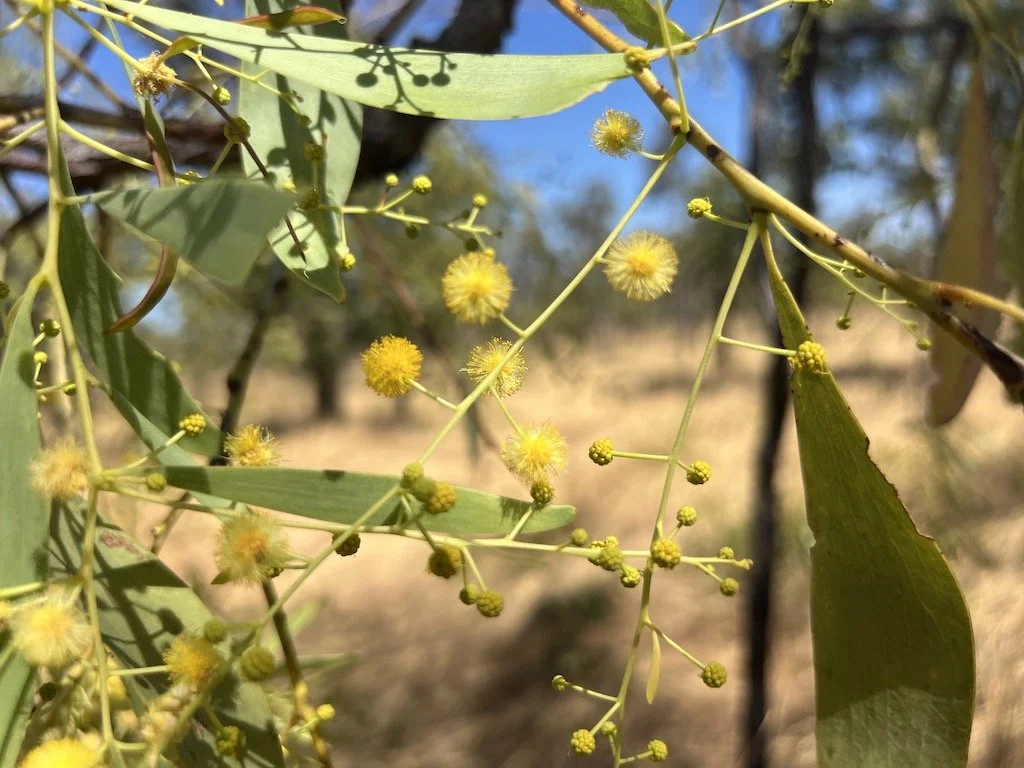
Erect and hardy multi branched wattle with bright yellow flowers on long spikes. Red-brown or grey coloured bark. Simple and elegant open habit. Tough waterwise screening and landscape shrub. 1-3M
Read MoreAcacia hemignosta→
/
Medium sized stately, slender wattle. Attractive brown grey corky bark and beautiful yellow flowers in bloom. Very hardy, fast growing and tolerates a variety of habitats. Common in watercourses and woodland. Excellent showy tree for gardens, rural properties, windbreaks and rehabilitation or soil stabilisation. 2-5M
Read MoreGrevillea dimidiata→
/
Impressive slender small tree with rigid, unusually curved or wavy grey-green leaves and arresting blooms of creamy-white flowers. Sticky caustic coating on ripe fruits can burn on contact with skin. Prefers rocky or sandy well-drained soils in full sun. 1.5-3M
Read MoreBuckinghamia celsissima→
/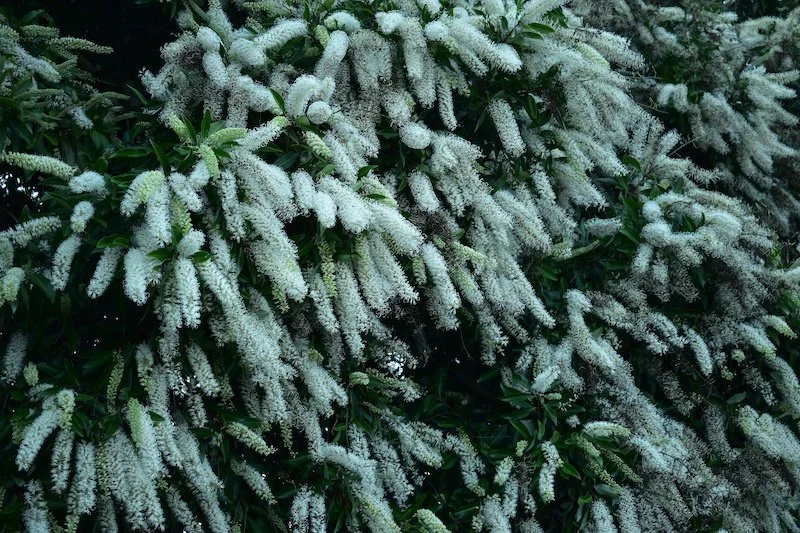
Beautiful small to medium Nth QLD wet/dry rainforest tree, with dark green glossy evergreen foliage and masses of stunning long creamy flowerheads. Host species for butterfly larvae, very attractive to bees and nectar eating birds. Popular park, streetscape and garden planting for floral displays, low maintenance and durability once established. Tolerates variety of well drained soils in sunny/shady locations. In cultivation generally 8-12M
Read MoreMelaleuca cajuputi→
/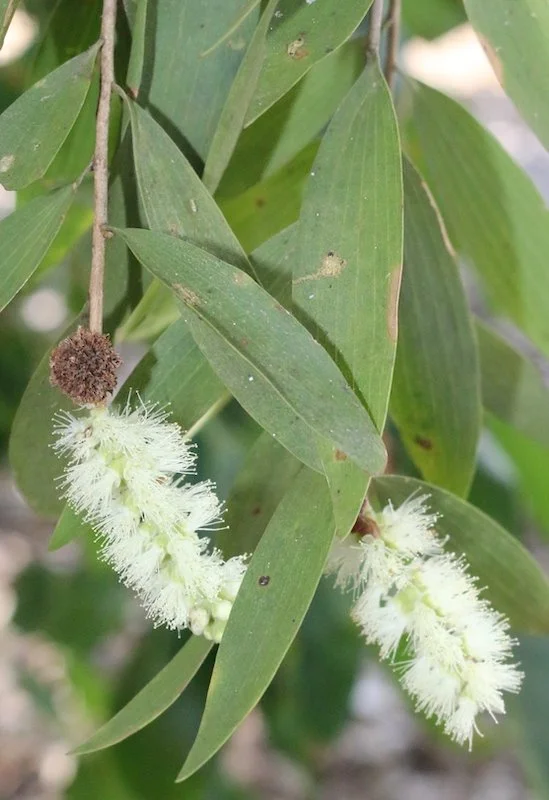
Common medium to large NT paperbark found in heavy clay soils including regularly inundated coastal areas. Grey, brown or whitish papery bark, silky new foliage and white, cream or green-yellow dense flower spikes. Wide indigenous and medicinal uses. Leaves used for antibacterial/anti-inflammatory ‘Cajuput oil’. Excellent shade, shelter and estuarine habitat tree, able to tolerate brackish and acid sulphate soils. Can grow larger but commonly 10-20M
Read MoreHibiscus meraukensis→
/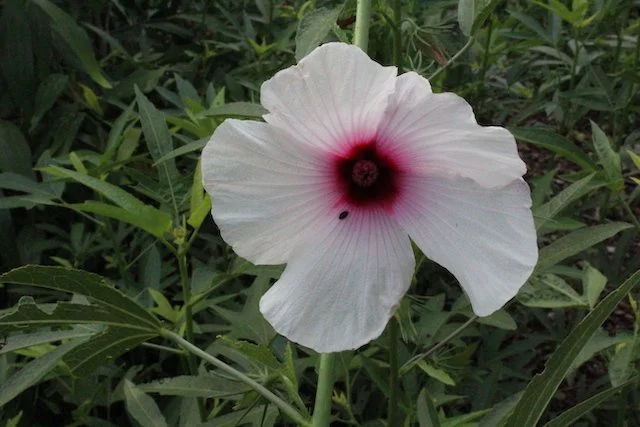
Spectacular fast growing annual ground cover. Dark green variable leaves and stunning large white-pink flowers with maroon-purple centre. Widespread in coastal vine thickets, riparian areas, Melaleuca forests and savanna-sandstone woodlands and shrublands. Grows in laterite, sandstone, clay, coastal sands and limestone. Flowers during the wet and dies off in following dry season, but re-appears readily from seed. Very attractive garden or rockery shrub. 1-2M
Read MoreOpilia amentacea→
/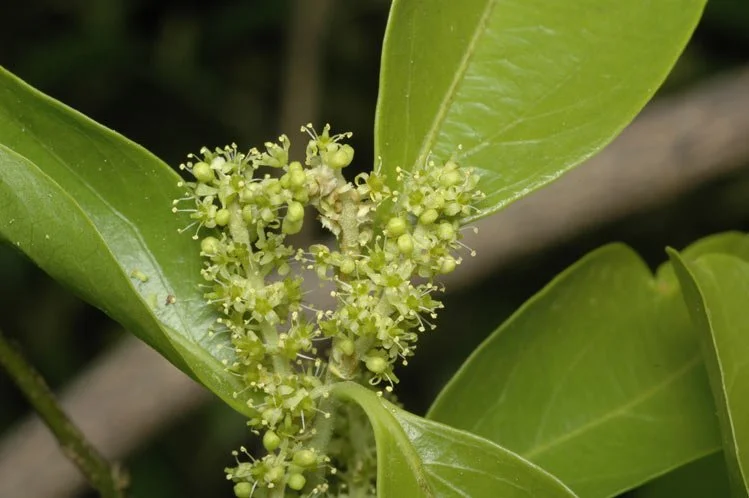
Common, although extremely variable evergreen native vine, vigorous climber or scrambling shrub. Occasionally tree form. Wide ranging in coastal bushland, Acacia woodland, dry and riverine forest. Juicy cream grape-shaped edible fruits & seeds, with leaves cooked and eaten as a vegetable. Wide medicinal uses. 2-5M
Read MoreBothriochloa bladhii→
/
Widespread perennial, palatable and plentiful tufted native grass with bluish foliage, turning reddish with maturity. Distinct aromatic smell when crushed. Common in low lying woodlands, edge of creeks and drier floodplains. Fire & drought tolerant, palatable to cattle, horses, livestock and native ruminants. Tolerates heavy grazing and weed competitive. Establishes readily as revegetation, erosion control species to restore disturbed land. Grows on both sandy loam/clay fertile soils and acidic infertile soils. Flowers & fruits all months. 0.5-1.5M
Read MoreCycas armstrongii→
/
Beautiful, iconic and endemic native Cycad found across Top End Eucalyptus and open deciduous woodland forests. One of the smallest species. Listed as vulnerable and fully protected in the NT. A stunning termite resistant ornamental landscape feature planting. Light orange-brown palm like new feathery leaves, becoming glossy at maturity. Extremely fire tolerant and long lived. Deciduous, less so under irrigation. Wide indigenous uses, although all parts considered toxic.
Read MoreTerminalia microcarpa→
/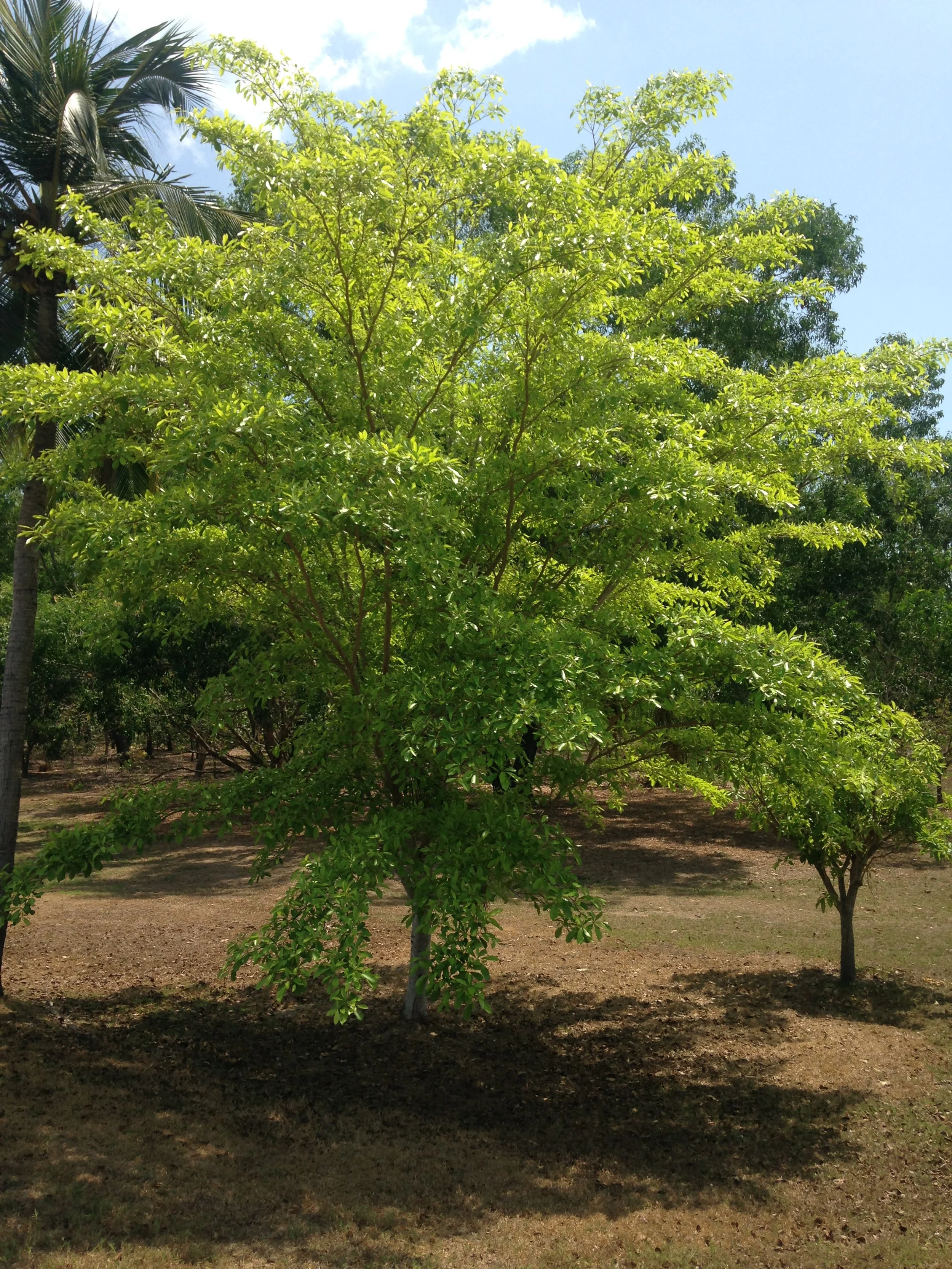
Graceful, decorative large spreading tree with diagonally layered branches, highly scented flowers and tasty sweet edible purple fruits. Excellent fast growing Top End native shade tree. Red-maroon flush before dropping leaves, with foliage returning soon after in bold fluorescent green flush. Common urban & rural streetscape and parkland planting. Bird & butterfly attractant. 10-20M
Read MoreSyzygium fibrosum→
/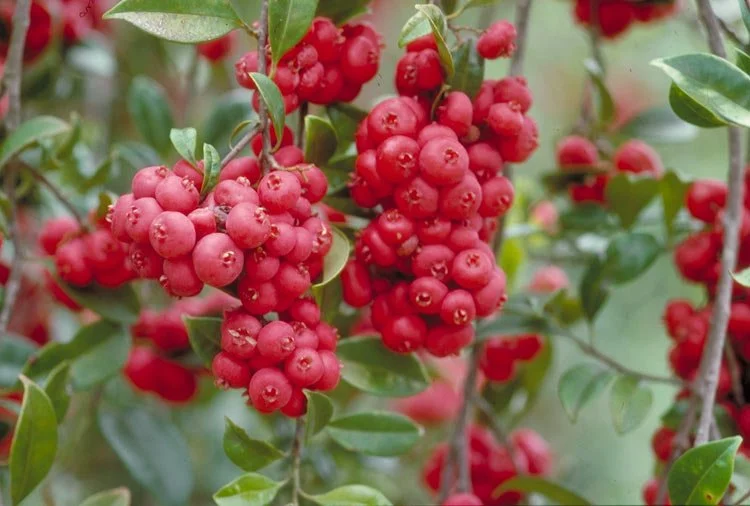
Very attractive small tree with neat compact form & dense dark green foliage contrasting with profusion of cream flowers. Bright pink-red fruits can be eaten raw, used to make jam, flavourings or added to Gin/Vodka drinks. Excellent bird attractant, landscaping, streetscape and feature garden planting. 4-6M