
Small and hardy shrub tending to a rounded or flat-topped form with attractive yellow spherical flowers. Small green to grey-green triangular leaves. Excellent small low-maintenance shrub for gardens and rockeries, borders and edging. Prefers sandy well-drained soils and full sun. 0.3 - 1.5M
Read MorePlumbago zeylanica→
/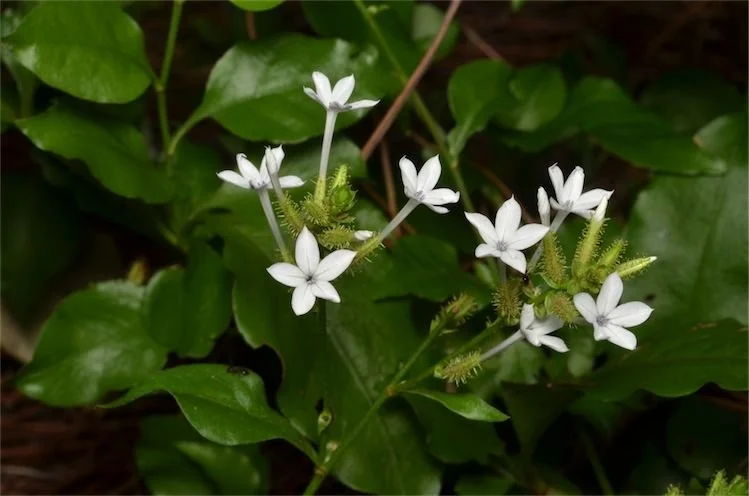
Scrambling shrub or small herb with elegant white to pale blue star-shaped flowers. Small pill shaped seed pods with sticky hairs. Grows as an understory plant in monsoon forest and vine thickets. Prized for its usefulness as a shade tolerant ground cover in urban and rural gardens. 0.2-1M
Read MoreCrotalaria retusa→
/
Colourful short lived/perennial shrub with yellow pea flowers and rattling seed pods. Highly attractive to native butterflies, the Swamp/Plain Tiger and Common Crow species. Thought to be toxic to some livestock, otherwise a very attractive small garden bed feature specimen. 1M
Read MoreAcacia humifusa→
/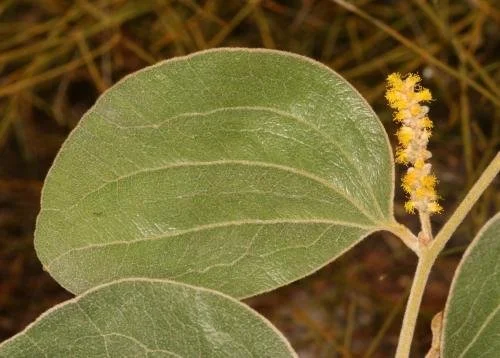
Lovely shrub or ground cover with soft blue-green semi-circular miniature elephant ear shaped leaves and bright yellow cylindrical flower spikes. Can flower throughout the year. Ideal for infilling and low screening in gardens and rockeries. Prefers full sun and sandy soils. 0.5-2M
Read MoreAcacia yirrkallensis →
/
A very rare and hardy Acacia endemic to the NT, found mostly in East Arnhem Land. Small shrub with narrow pointed leaves and globular yellow flowers. Excellent for gardens and rockeries. Prefers full sun and sandy soils. 0.5-1M
Read MoreAcacia lycopodiifolia→
/
Delicate and attractive small shrub or groundcover wattle with tiny intricate spiral leaves and large yellow orb shaped flowers. Perfect for compact gardens, infilling, borders and edging. Prefers rocky or sandy soils in full sun but will tolerate dappled light. 0.2-1M
Read MoreTephrosia oblongata→
/
Very pretty erect perennial shrub. Similar to T.rosea only with orange flowers. Important nitrogen fixing legume and bee attracting plant for fast colourful garden in-filling in well drained sunny areas. Relatively common across rocky, sandstone Top End and on sandy lowlands, occasionally in monsoon forest and vine thicket. Low maintenance and hardy. Most Tephrosia considered toxic, as commonly used as traditional fish poison. Very fast growing but can be short lived. 1-2M
Read MoreGrevillea prasina→
/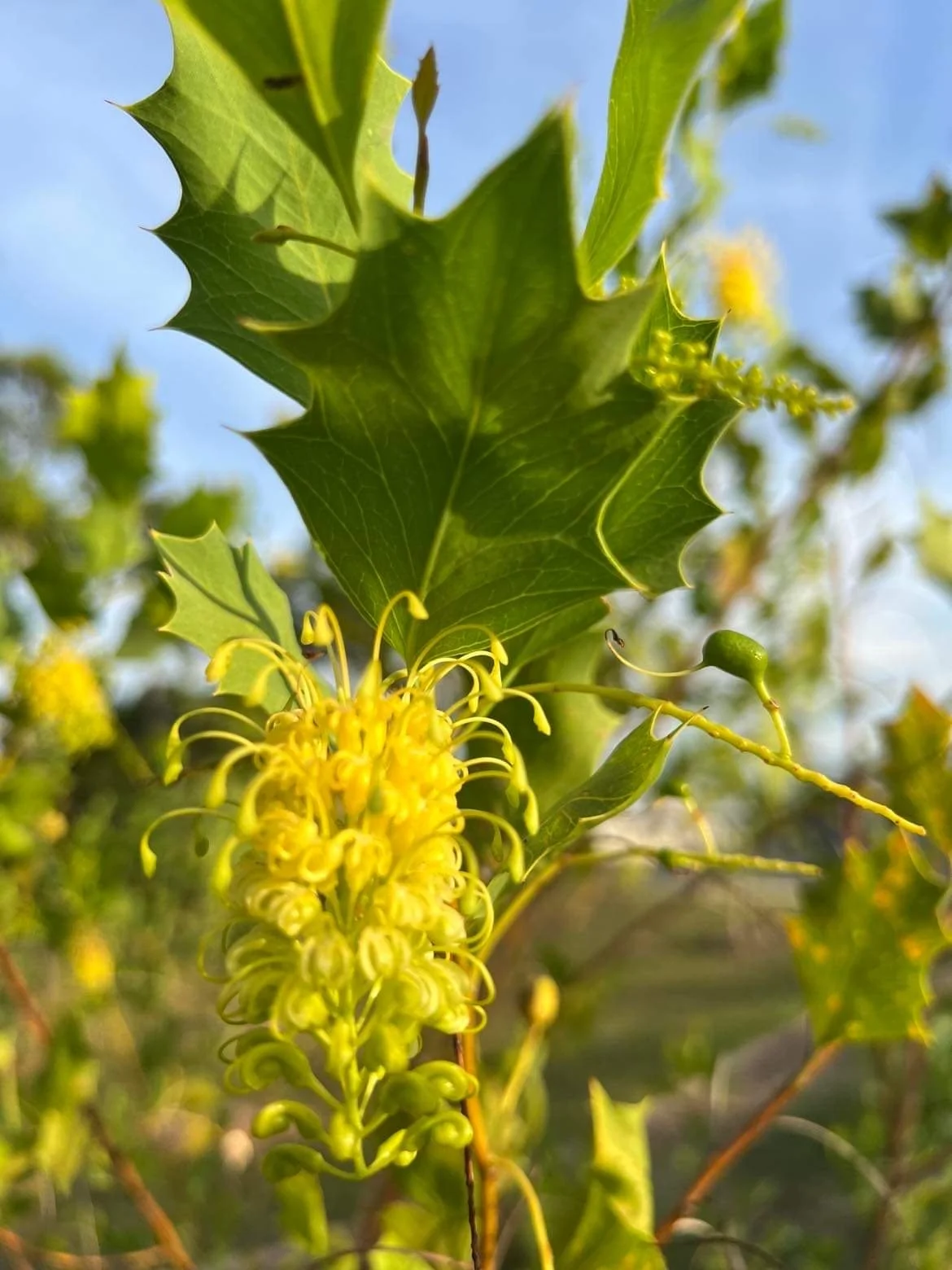
Very low spreading Grevillea shrub from the Western Top End. Holly like leaves and white-cream to cream-yellow-green flowers. Hardy and showy low ground cover specimen for border, filling and accent in garden beds and rockeries. Rarely seen in cultivation. Prefers rocky well drained soils in full sun. 1-2M
Read MoreHibiscus meraukensis→
/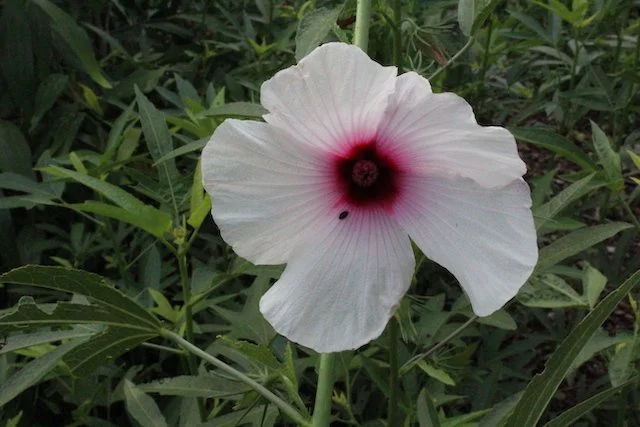
Spectacular fast growing annual ground cover. Dark green variable leaves and stunning large white-pink flowers with maroon-purple centre. Widespread in coastal vine thickets, riparian areas, Melaleuca forests and savanna-sandstone woodlands and shrublands. Grows in laterite, sandstone, clay, coastal sands and limestone. Flowers during the wet and dies off in following dry season, but re-appears readily from seed. Very attractive garden or rockery shrub. 1-2M
Read MoreCrinum arenarium→
/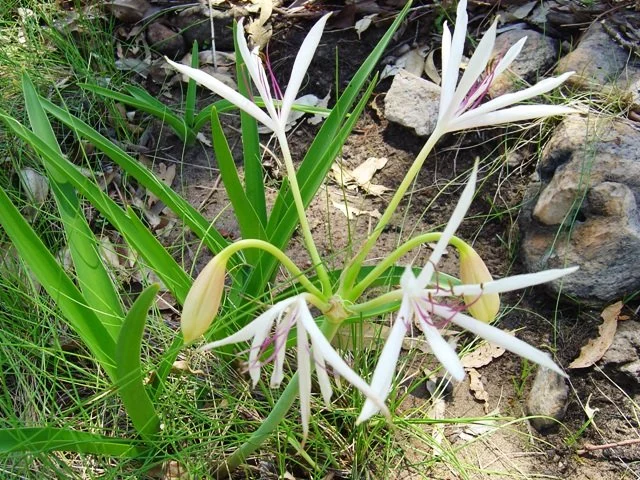
Gorgeous erect native lilly endemic to Northern Australia, with broad glossy blue-green strappy leaves and large clusters of white-purple perfumed flowers. Tolerates full sun or partial shade in waterlogged areas, sandy and clay soils. Attractive to bees, butterflies and birds. Excellent specimen for border edge plantings or potted. Bulbs are considered poisonous. 1-2M
Read MoreCrinum pedunculatum→
/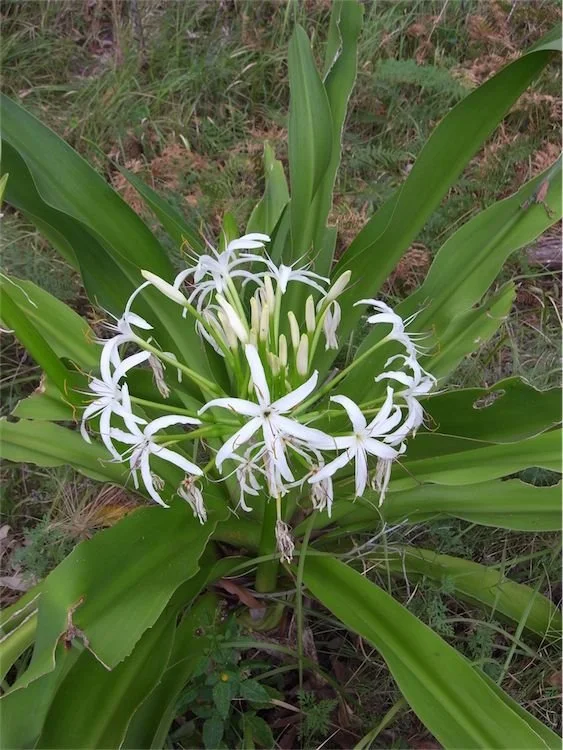
Versatile and hardy perennial native lily found in moist areas near streams and tidal areas. Tolerates full sun or partial shade. Broad strappy leaves and large tall clusters of white, pleasantly scented flowers make for a beautiful feature plant in garden or potted. Grows in poorly drained soils, under other trees and will flower in shade. 1.5-2.5M
Read MoreHeteropogon contortus→
/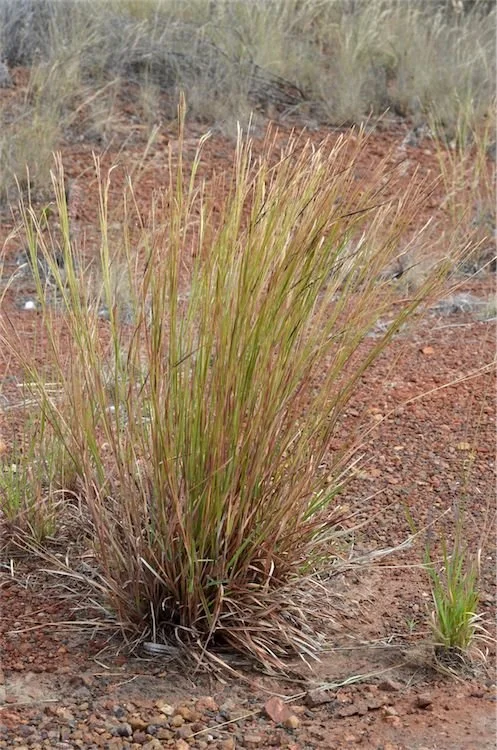
Robust, erect and dense native grass with light-green leaves and curled, sharp tipped seeds. Widespread in grasslands, open woodlands, riverbanks, roadsides and degraded areas. Tolerates variety of soils including sandy loam and laterite. Useful fire & drought tolerant pasture species early in the wet and for revegetation, as spreads rapidly. 1M
Read MoreBothriochloa bladhii→
/
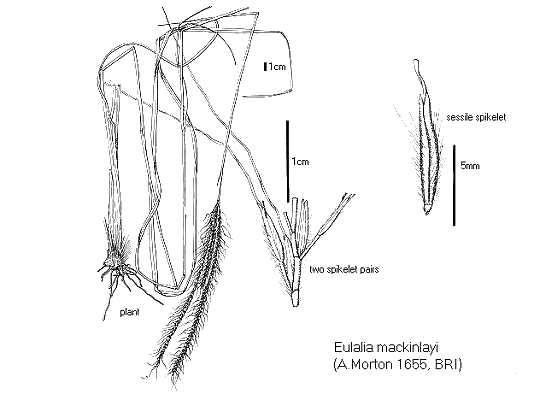
Widespread perennial, palatable and plentiful tufted native grass with bluish foliage, turning reddish with maturity. Distinct aromatic smell when crushed. Common in low lying woodlands, edge of creeks and drier floodplains. Fire & drought tolerant, palatable to cattle, horses, livestock and native ruminants. Tolerates heavy grazing and weed competitive. Establishes readily as revegetation, erosion control species to restore disturbed land. Grows on both sandy loam/clay fertile soils and acidic infertile soils. Flowers & fruits all months. 0.5-1.5M
Read MoreEulalia mackinlayi→
/
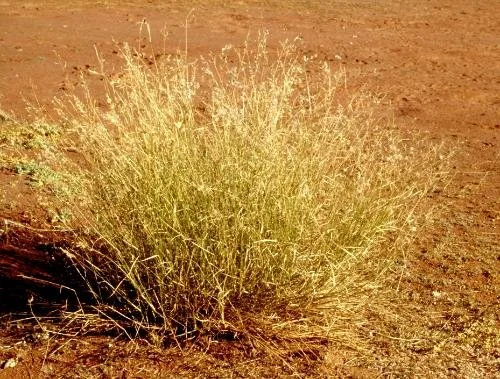
Large perennial tufted grass, endemic to sandy and rocky soils in tropical Australia. Useful coloniser for revegetaion and as diverse finch attracting grass for suburban plantings. 1.5-2.5M
Read MoreEriachne obtusa→
/
Slender and erect tufted native perennial grass with wiry stems & short stiff bright green leaves. Found in wide variety of habitats on loamy, clay, lateritic & sandy occasionally saline soils in Eucalypt woodlands and shrublands. Useful low growing coloniser for revegetaion with Spinifex and Chrysopogon and as diverse finch attracting grass for suburban plantings. 0.6M
Read MoreAmpelopteris prolifera→
/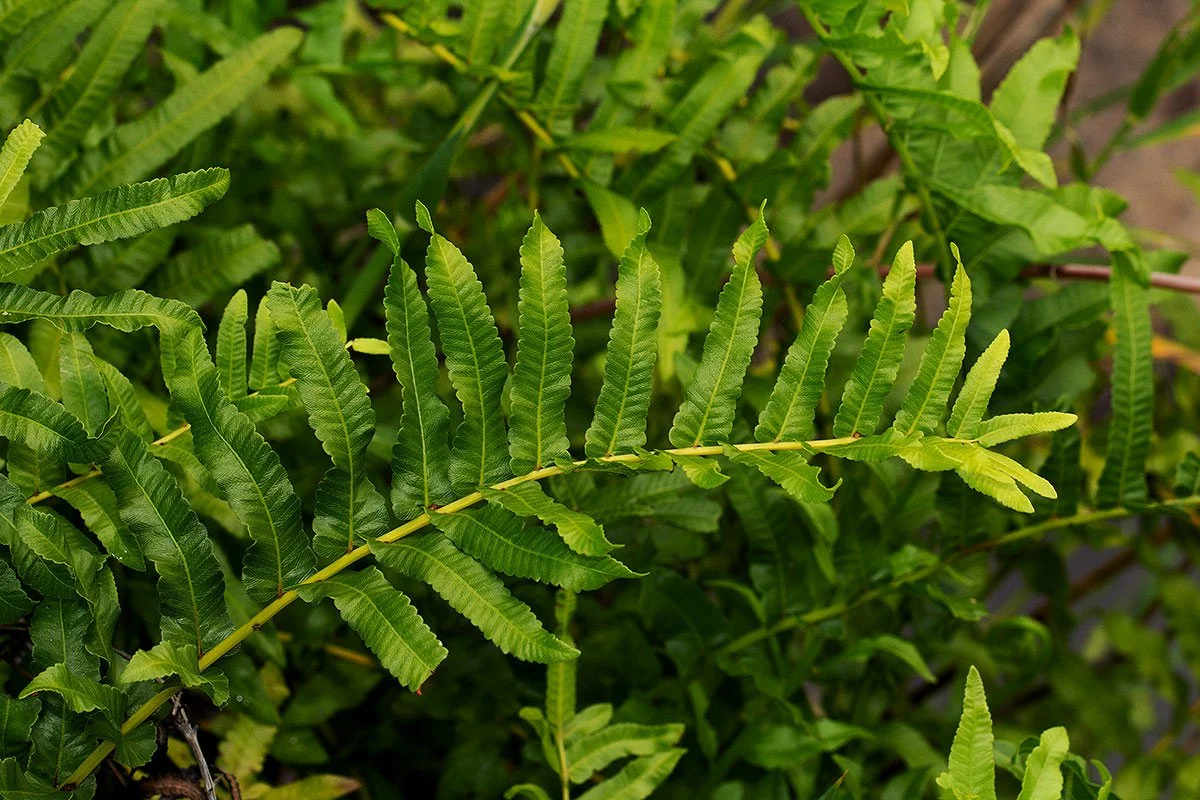
Pretty low scrambling tropical fern with bright green fronds. Full sun and part shade tolerant, provided ample moisture. Found in riparian rainforest, around springs and on edges of lagoons. Compact tropical planting for around borders and garden edges. 0.5-1M
Read MoreHeteropogon triticeus →
/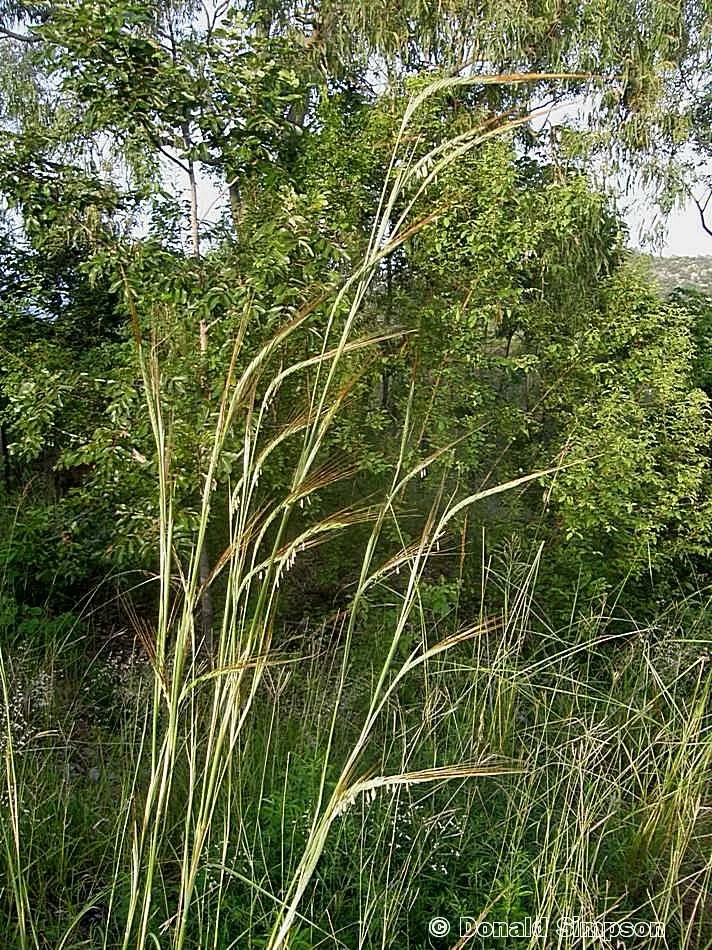
Hardy erect perennial tussock grass found across tropical grasslands of northern Australia, particularly eucalypt woodlands & occasionally gravelly soils in wetter areas. Ideal drought tolerant revegetation species. Important food source & nesting site for native birds and small mammals. Seeds eaten by gouldian, masked & long-tailed finch and the Evening Brown and Dingy Bush-brown butterfly larvae. 1-2M
Read MoreLomandra longifolia→
/
Very hardy & highly versatile small strappy garden edging & low ornamental planting. Heavily scented nectar attracts pollinating insects. Suitable for indoor potting, or full sun. Australian native to all but NT & WA. 0.4-1M
Read MoreCrotalaria novae-hollandiae→
/
Small erect and very colorful perennial shrub with bursts of yellow pea flowers and rattling seed pods. Fast growing & spreading as garden bed filler and highly attractive to native butterflies, particularly the Swamp/Plain Tiger and Common Crow species. Can require management to keep contained. Thought to be toxic to some livestock, otherwise a very attractive small garden bed feature specimen. 1M
Read MoreAbelmoschus moschatus→
/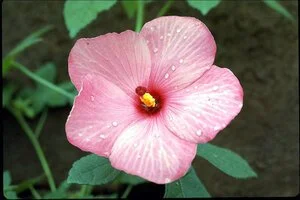
Attractive trailing shrub. Watermelon pink to white/cream hibiscus-like flowers last one day, but prolific during wet season. Re-shoots from underground tuber with first rains. Tubers, leaves and shoots edible raw or cooked. Wide medicinal uses. Food plant for the Spotted Bollworm moth and Cotton Leaf roller. 1-1.5M
Read More