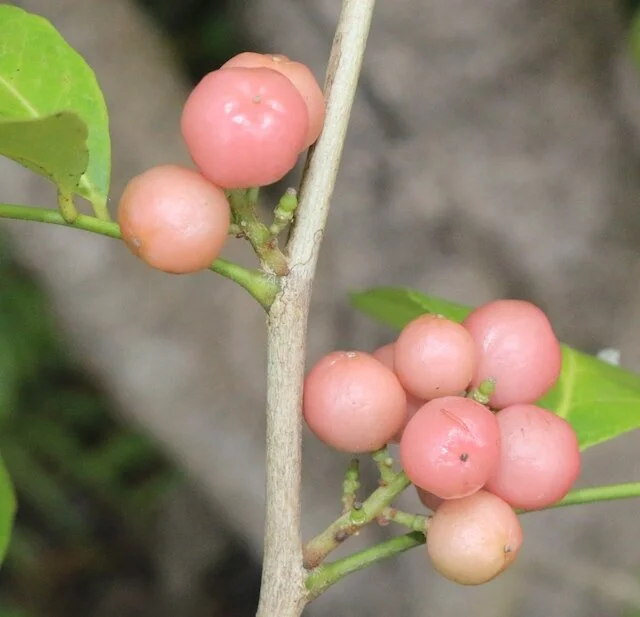
Attractive small, hardy and evergreen ornamental shrub. Tiny white fragrant flowers. Pink, juicy and sweet honey flavoured translucent fruits which make a delicious flavoured jam. Host tree for the Canopus swallowtail butterfly. Excellent understory choice for urban gardens as tolerates part shade. 2-4M
Read MoreGrevillea aurea→
/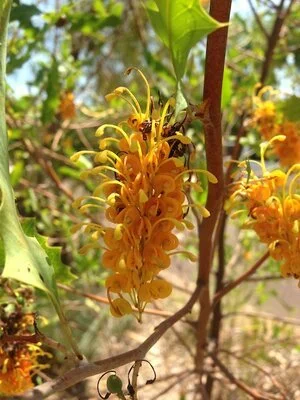
Glorious open shrub with blue-green holly-like foliage and brilliant yellow-orange flowers, seen throughout the year. A rare Grevillea from the Arnhemland plateau and one of the Top End's most decorative. Open form serves to further highlight stunning blooms. Prefers well drained soils in full sun. 1-4M
Read MoreGrevillea angulata→
/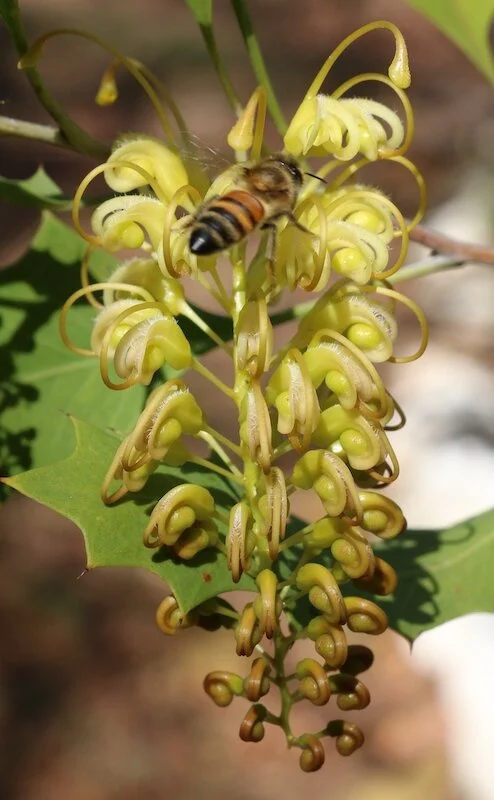
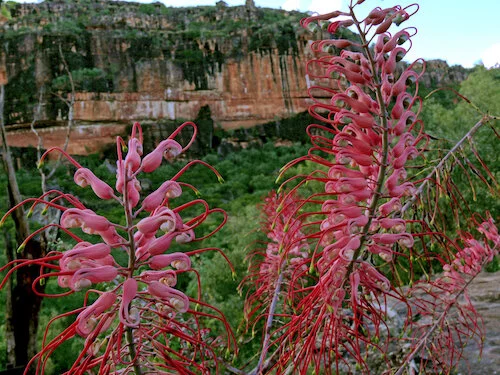
Very pretty small shrub endemic to the NT. Holly like leaves and decorative greenish white to yellow orange pendulous flowers year round. Excellent fast growing, hardy ornamental feature shrub. Prefers well drained soils in full sun. 1-2M
Read MoreGrevillea dryandri (Dasycarpa)→
/
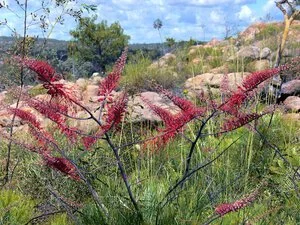
Iconic Darwin Grevillea, endemic to the NT. The more common dryandri sub-species in cultivation. Pretty, hardy and low shrub, useful for showpiece feature gardens. Very impressive blooms of showy red-pink flowers, which are extremely attractive to birds. Prefers well drained soils in full sun. 1-2M
Read MoreGrevillea dryandri (Dryandri)→
/
Iconic Darwin Grevillea. The least common dryandri sub-species in cultivation. Pretty, hardy and very low shrub, useful for showpiece feature gardens. Very impressive blooms of showy red-pink flowers, which are extremely attractive to birds. Prefers well drained soils in full sun. 1M
Read MoreGrevillea formosa→
/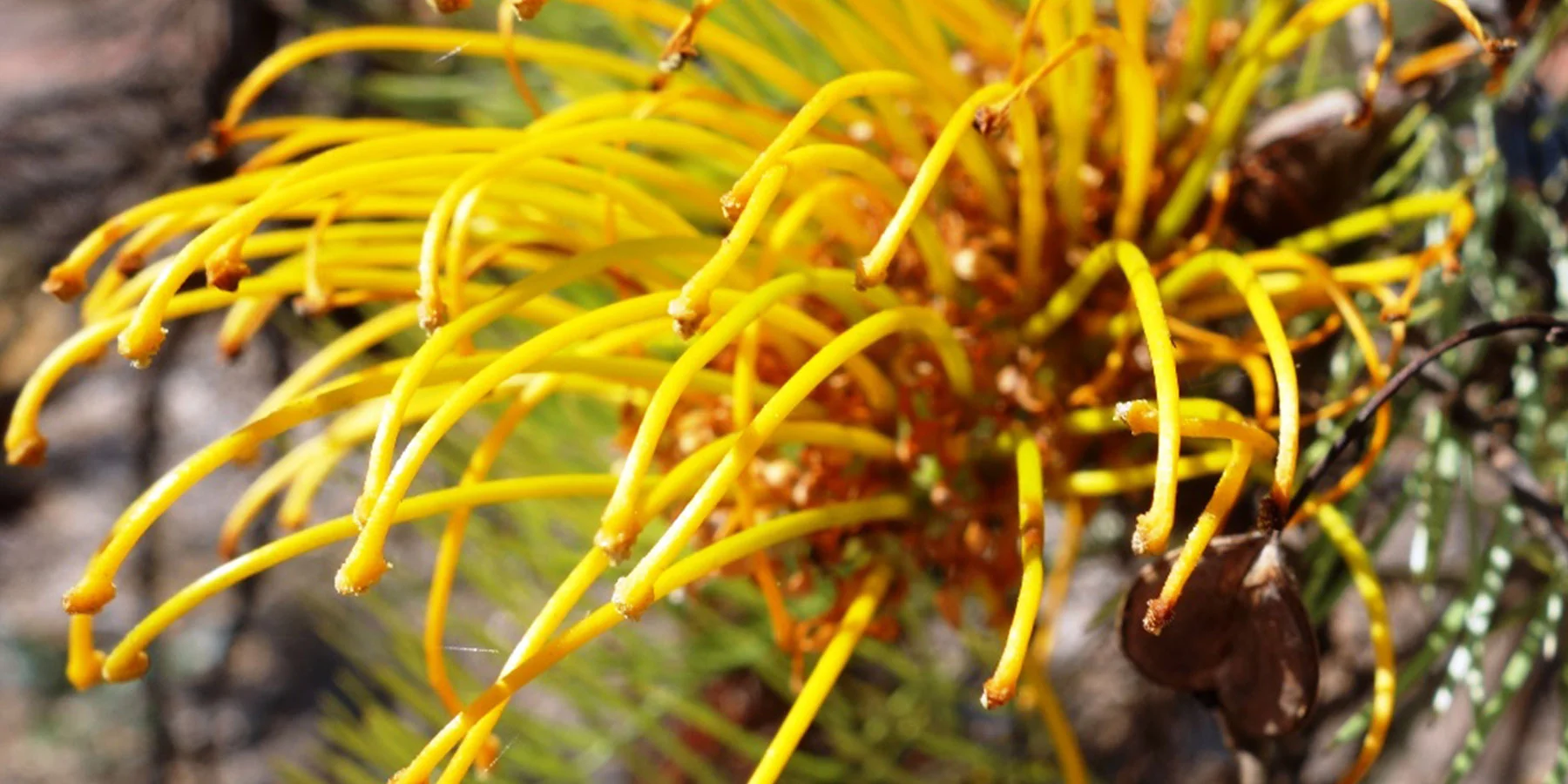
Iconic & endemic Darwin Grevillea. An impressive spreading ground cover, hedged bush or low shrub often used in feature gardens, rockeries & landscape plantings for its grey green leaves & blooms of showy yellow flowers. Hardy & attractive. Excellent bird attractant. Prefers well drained soils in full sun. 1-2M
Read MoreGrevillea mimosoides→
/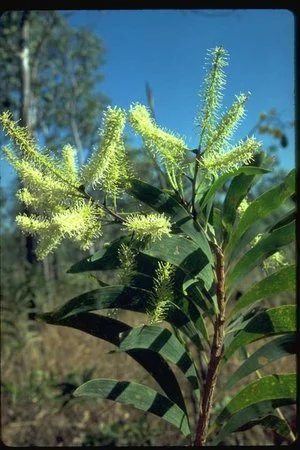
Small erect grevillea tree with Acacia like habit. Pretty white-creAmy bottlebrush flowers. Scattered in the Darwin region in open forest or woodland and across to Kimberley. Caustic coating on fruit used in ceremonial skin markings. 3-8M
Read MoreGrevillea parallela→
/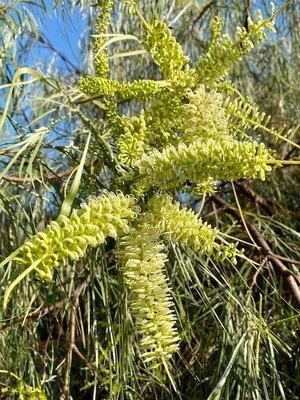
Stunning Grevillea shrub/small tree. Gorgeous perfumed & nectar rich cream-white flowers attract many birds & bees. Ornate silvery pendulous foliage. Rarely seen in cultivation. Prefers well drained soils in full sun. 3–6M.
Read MoreGrevillea pluricaulis→
/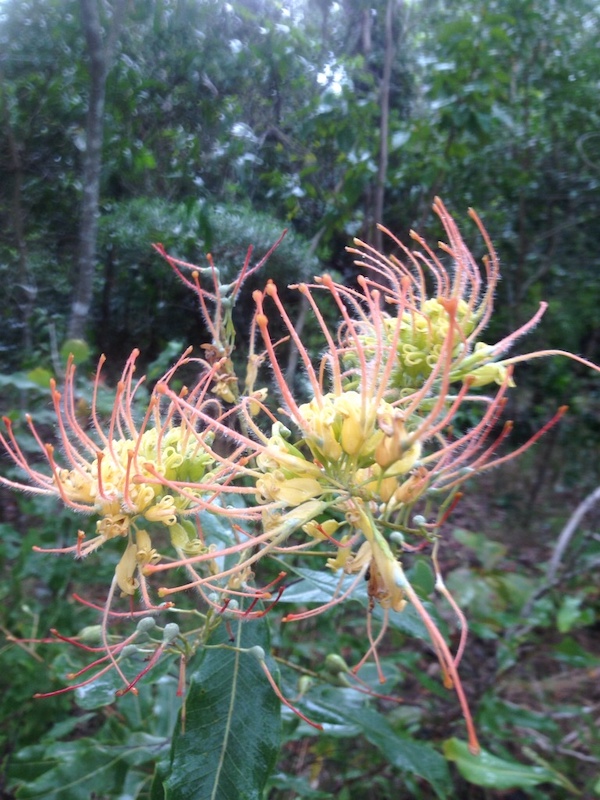
Small multi stemmed Grevillea shrub endemic to the Top End with stunning bright green-pink flowers. Hardy and showy specimen for border, filling and accent in garden beds and rockeries. Rarely seen in cultivation. Prefers well drained soils in full sun. 2.5-3M
Read MoreGrevillea refracta→
/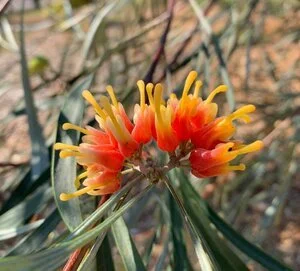
Spectacular slender ornamental Grevillea shrub. Ideal for gardens, with stunning small delicate orange-red flowers for much of the year and unique silver-grey foliage. Rarely seen in cultivation. Prefers well drained soils in full sun. 3-5M
Read MoreGrevillea versicolor→
/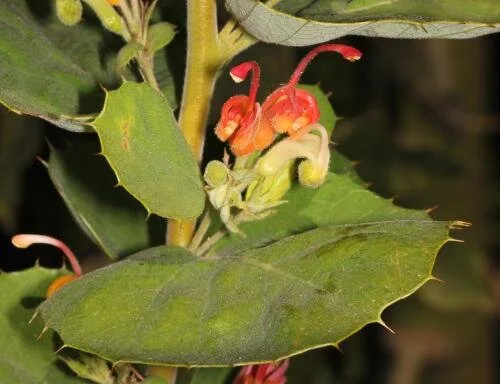
Near threatened small Grevillea from the Arnhem coast and plateau. Bright yellow, white, or apricot flowers darkening to red with strong very sweet fragrance. Rarely seen in cultivation. Prefers well drained soils in full sun. 1.5-3M
Read MoreGrevillea wickhamii→
/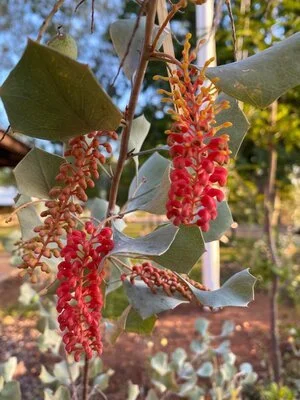
Very hardy and distinctive large Grevillea shrub from central NT with smooth bark, holly-like leaves and beautiful showy yellow-red flowers. Sought after for park, garden and rockery plantings. Rarely seen in cultivation. Prefers rocky well drained soils in full sun. 3-5M
Read MoreGrewia savannicola→
/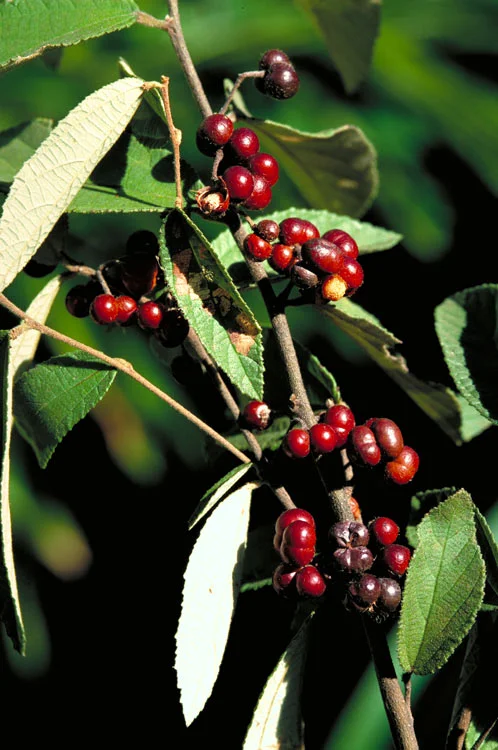
Low rambling shrub with coarse hairy foliage, producing prolific amount of delicious sweet tangy fruit with chewy texture. Important revegetation species and medicinal plant. Tasty low growing edible for suburban and rural garden beds. 1.5M
Read MoreHaemodorum coccineum→
/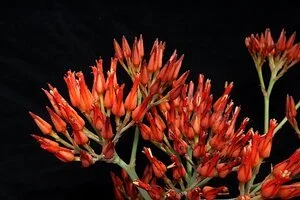
Perennial woodland herb with strap-like leaves and impressive dense deep-red or orange-red flowers in wet season. Bulb rootstock regenerates annually. Traditionally used as dye for colouring plant fibres. Suitable for full sun, well-drained bushland gardens. Related to Kangaroo Paw. 1M
Read MoreHelicteres isora →
/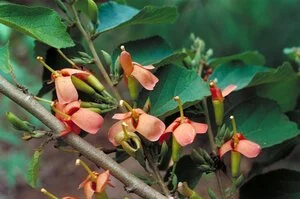
Hardy small shrub with pretty soft pale orange-yellow flowers, very attractive to honeyeaters, and unique spiralling seed pods. Found in monsoon forest edges & open woodland. Useful for borders, filling & screening. Can tolerate part shade & dry periods. 2-3M
Read MoreHibiscus petherickii→
/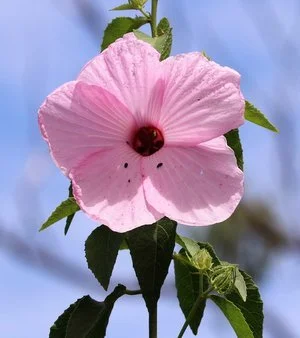
Ornate perennial small shrub with gorgeous large solitary pink flowers. Endemic to Litchfield National Park near Florence Falls. Grows in eucalypt woodland and in sandy soils. Rare, colourful infill planting for garden beds & rockeries in full sun. 2-4M
Read MoreHibiscus tiliaceus (NT Native)→
/
Hardy and attractive rounded native shrub or tree with showy yellow flowers and rich dense green foliage. Tolerates high wind, salt spray and poor drainage. Useful feature tree for filling, shade, screening and windbreak. And important revegetation species for creek and coastal fringes. 5-8M
Read MoreHibiscus tiliaceus rubra→
/
Hardy and attractive rounded tropical shrub or tree with showy yellow flowers and rich maroon-green leaves. Extremely fast growing & colourful foliage in full sun. Can be formatively pruned for best results. Useful feature and accent tree for filling, shade, screening and windbreak. 4-7M
Read MoreHydriastele wendlandiana→
/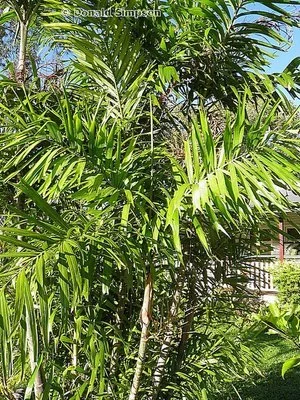
Elegant medium-sized native clumping palm. Slender & neat form, useful for in-filling beneath established plants in suburban gardens & for potted indoor use. Widespread through coastal Top End in evergreen rain forests, often at springs. Shade tolerant, requires moisture. More Information. 10-12M
Read MoreHymenocallis littoralis→
/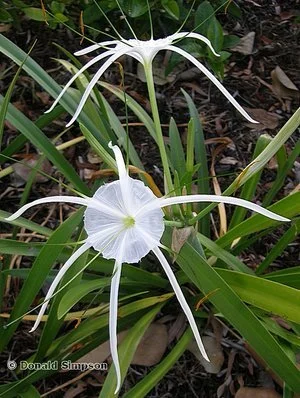
Vigorous low glossy and tropical border edging/feature plant with stunning large white slightly vanilla scented flowers & dark green strappy leaves. Evergreen ornamental specimen which grows best in full sun to part shade in rich well drained soils, potted or aquatically. Hardy once established & tolerates coastal areas. Excellent low maintenance choice for understory plantings. Best planted en masse. 0.7M
Read More